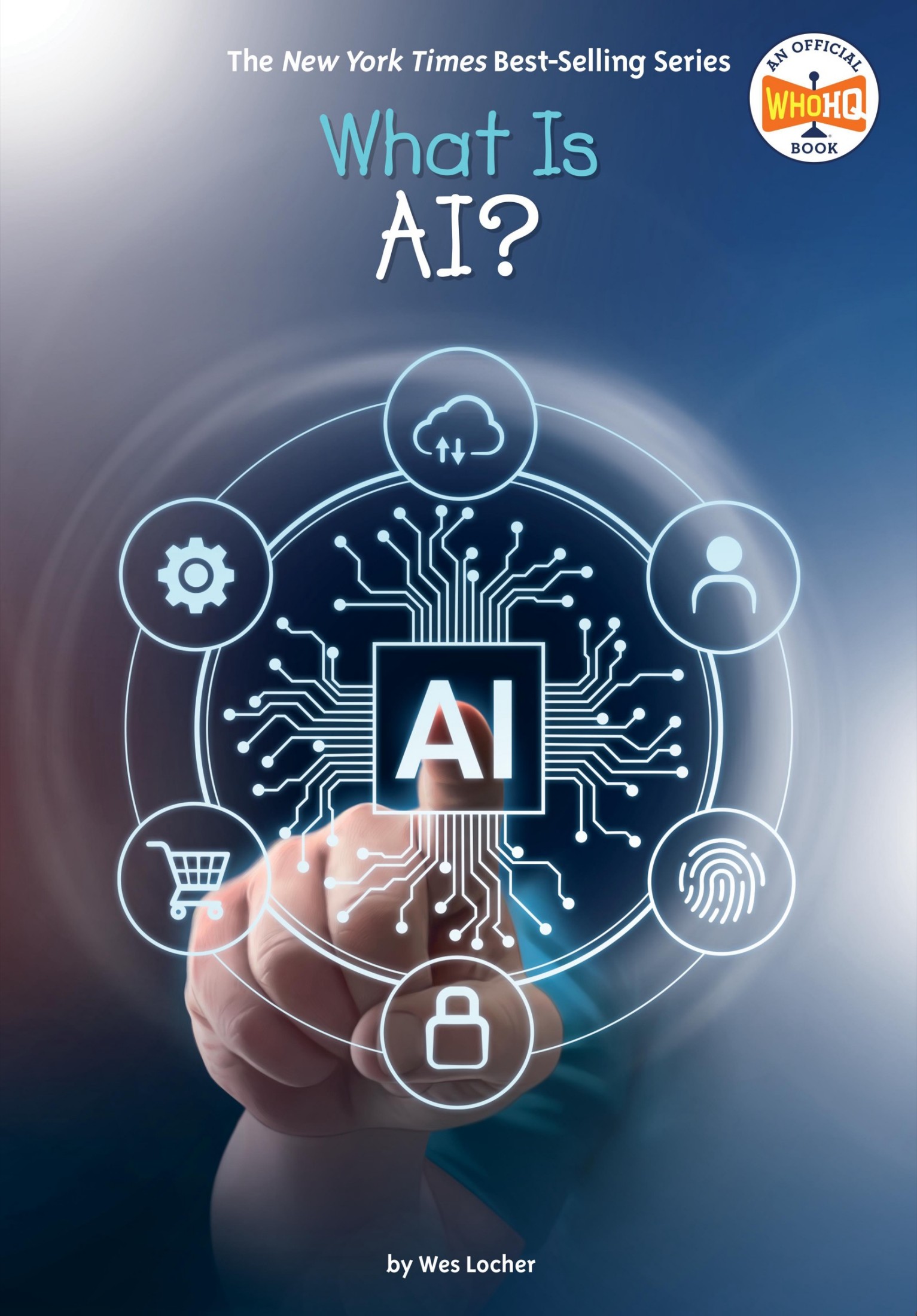


![图片[1]-【2732】What Is AI – Wes Locher, Who HQ 有声书音频MP3+电子书-新知365](https://www.nkcity.fun/wp-content/uploads/2026/05/What-Is-AI-Wes-Locher-Who-HQ-714x1024.jpg)
📘 英文原版有声书介绍:《什么是人工智能?》
What Is AI? (Who HQ Series) — Wes Locher & Who HQ
推荐语: Who HQ 带你从图灵讲到大模型——帮孩子(和大人)用英文真正搞懂 AI 是什么、怎么来的、以及我们要怎么和它共处。
1. 书籍概况
- 系列: Who HQ(What Was?/ Who Was?/ Where Is?同系科普/人文非虚构系列)
- 作者: Wes Locher(科技科普作家)× Who HQ 编辑团队
- 朗读者: Holter Graham(美音清晰、节奏平稳,适合非虚构信息吸收)
- 时长: 1 小时 11 分钟(极短,适合单次听完)
- 蓝思 / AR 预估: Lexile 850L–950L / AR 6.0–6.5
- 分类: ✅ 非虚构·科普/科技),与 Fallout同格
2. 内容简介:从图灵测试到 ChatGPT——AI 是如何诞生的?
- 🤖 AI 的起源:Alan Turing 的”图灵测试”、早期专家系统、棋类 AI(深蓝 vs 卡斯帕罗夫)
- 📱 生活中的 AI:Siri、Alexa、推荐算法、自动驾驶、面部识别
- 💬 大语言模型时代:ChatGPT、训练数据、提示词(prompt)是什么
- ⚖️ 争议与未来:深度伪造(deepfake)、隐私、就业影响、AI 伦理
用孩子能懂的语言解释机器学习、神经网络、生成式 AI 等概念,不带恐吓也不过度简化。
3. 核心亮点(教学/选材角度)
- 极短的高阶非虚构听力材料:1h+ 就能听完,适合作为高中英语/科技英语的入门听力。
- 当代刚需话题词汇:algorithm, dataset, neural network, bias, generate, chatbot——提前积累 STEM 学术词汇。
- Who HQ 品牌保证:事实准确、脉络清晰,比普通分级科普深一阶,比大学教材浅得多。
- 极佳讨论引子:听完可延伸讨论——Should AI do your homework? / Can a robot be creative?
4. 听力与阅读建议
| 维度 | 建议 |
|---|---|
| 适合年龄(母语) | 8–12 岁(官方),内容深度适合更广 |
| 适合年龄(EFL 中国学生) | 14 岁+(初二以上英语突出者或高中),校内英语高二以上或 FCE 基础较合适 |
| 英语水平 | CEFR B2–C1;非虚构信息密度高,背景知识要求较大 |
| 使用场景 | 科技英语听力素材、班本科普阅读、AI 主题讨论课前预习 |
| 前置知识 | 最好用过 ChatGPT / Siri 等,有基本科技常识 |
5. 同难度/同类型推荐
- Fallout— 同级高章非虚构(历史/冷战)
- What Is the Internet? / What Is Coding?— Who HQ 同系科技科普
- Steve Jobs (Walter Isaacson 青少版)— 传记类非虚构
📚 出版信息
Ages: 8 – 12 years
Children’s Audiobooks
What Is AI?
By: Wes Locher, Who HQ
Narrated by: Holter Graham
Length: 1 hr and 11 mins
Release date: 05-05-26
Language: English
What Is AI – Wes Locher, Who HQ
https://www.audible.com/pd/What-Is-AI-Audiobook/B0FMLJLNQY
Have you ever wondered how AI came to be? How did ChatGPT develop? Who is “Siri”? Find out everything you need to know about the rise of AI and advancing technology, including future applications and concerns, in this informative book.
It all began in 1822 when an English mathematician created the “Difference Engine,” the world’s first mechanical calculating machine. Fast-forward two hundred years, and cars are beginning to drive themselves! How did this technology advance? Over a series of trials and errors, steps forward and back, AI, or artificial intelligence, has most steadily developed since the 1950s. By the ’90s, AI technology began interacting with people in laboratories and at conferences, dazzling the world with its impressive knowledge and capabilities. The simulation of human intelligence by machines continues to revolutionize healthcare, transportation, and efficiency across the world. Learn all about this problem-solving facet of the computer science industry and where it might take us in the future.













暂无评论内容